By Kalu Obasi Benjamin
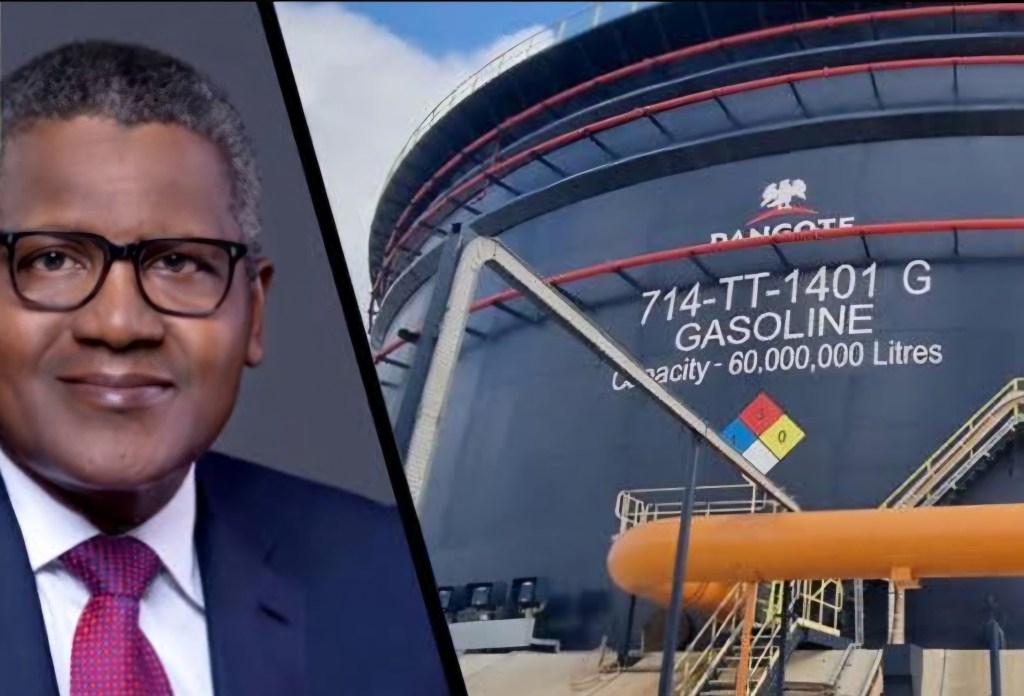
In a major shift for Nigeria, the Dangote Petroleum Refinery is set to supply between 60 and 65 million litres of petrol daily to the local market.
Since Nigeria usually consumes between 50 and 60 million litres a day, the refinery will produce more than enough to meet the entire country’s needs. Any extra fuel, estimated at up to 20 million litres, will be sold to other countries as exports.
Aliko Dangote, the President of the Dangote Group, confirmed that they have already signed agreements with several major oil marketing companies to distribute this fuel nationwide. Big names like NNPC, TotalEnergies, Mobil (11 plc), and Conoil are part of this group.
This new system is designed to make sure fuel is available everywhere and to stop the constant shortages and price swings that Nigerians have faced for years.
For decades, Nigeria was forced to buy almost all of its petrol from abroad, even though it is a major producer of crude oil. This made the economy vulnerable to high shipping costs and changes in global currency rates. By refining oil locally, the country can stop spending billions of dollars on imports, which should help strengthen the Naira and keep more money within the Nigerian economy.
The refinery is also performing better than many experts expected. During a recent visit, the head of the NNPC, Engr. Bayo Bashir Ojulari, noted that the plant was built to handle 650,000 barrels of oil a day but has already reached over 661,000 barrels in live tests. He described the facility as a “national asset” that proves Nigeria can use world-class technology to solve its own industrial problems.
Overall, this development is seen as a massive win for Nigeria’s energy security. By producing more fuel than it needs, the country moves from being a buyer to a seller on the global stage. This change is expected to stabilize the fuel supply chain, reduce the pressure on foreign exchange, and spark faster industrial growth across the nation.

Leave a comment